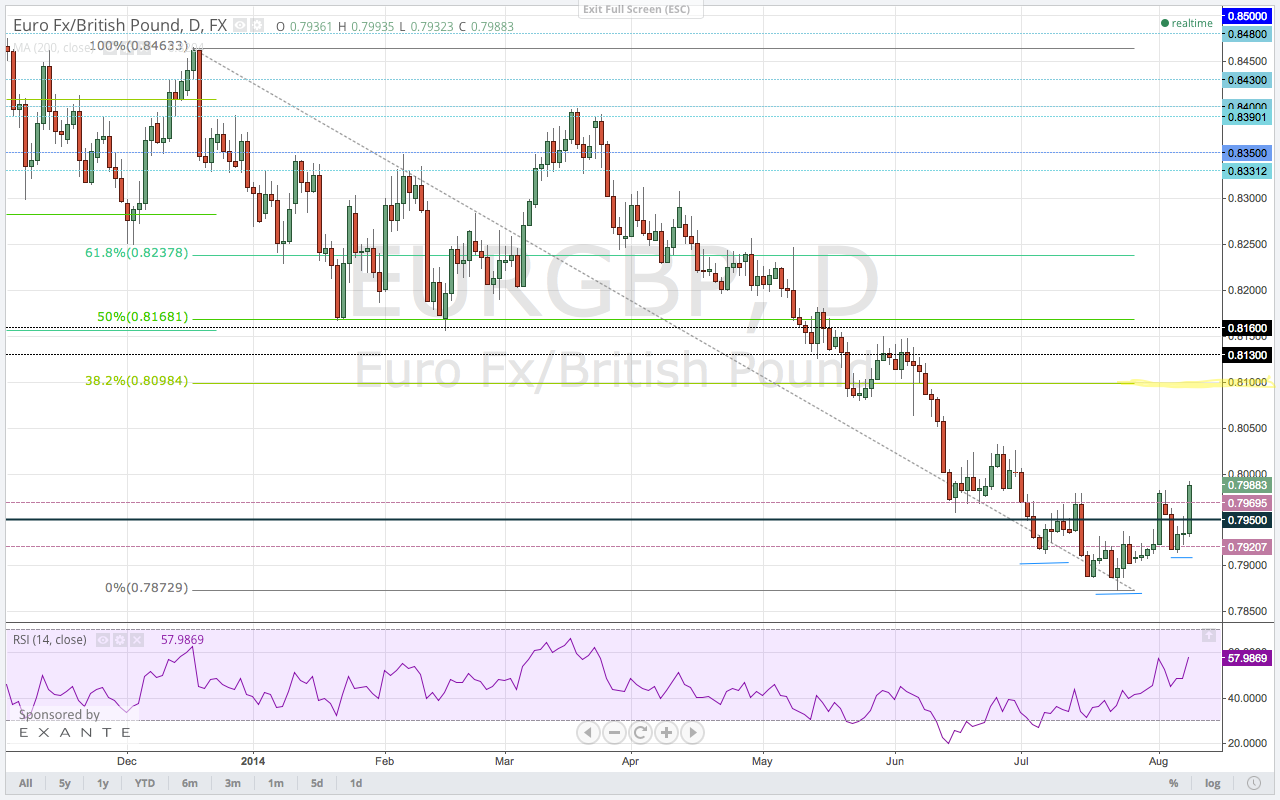
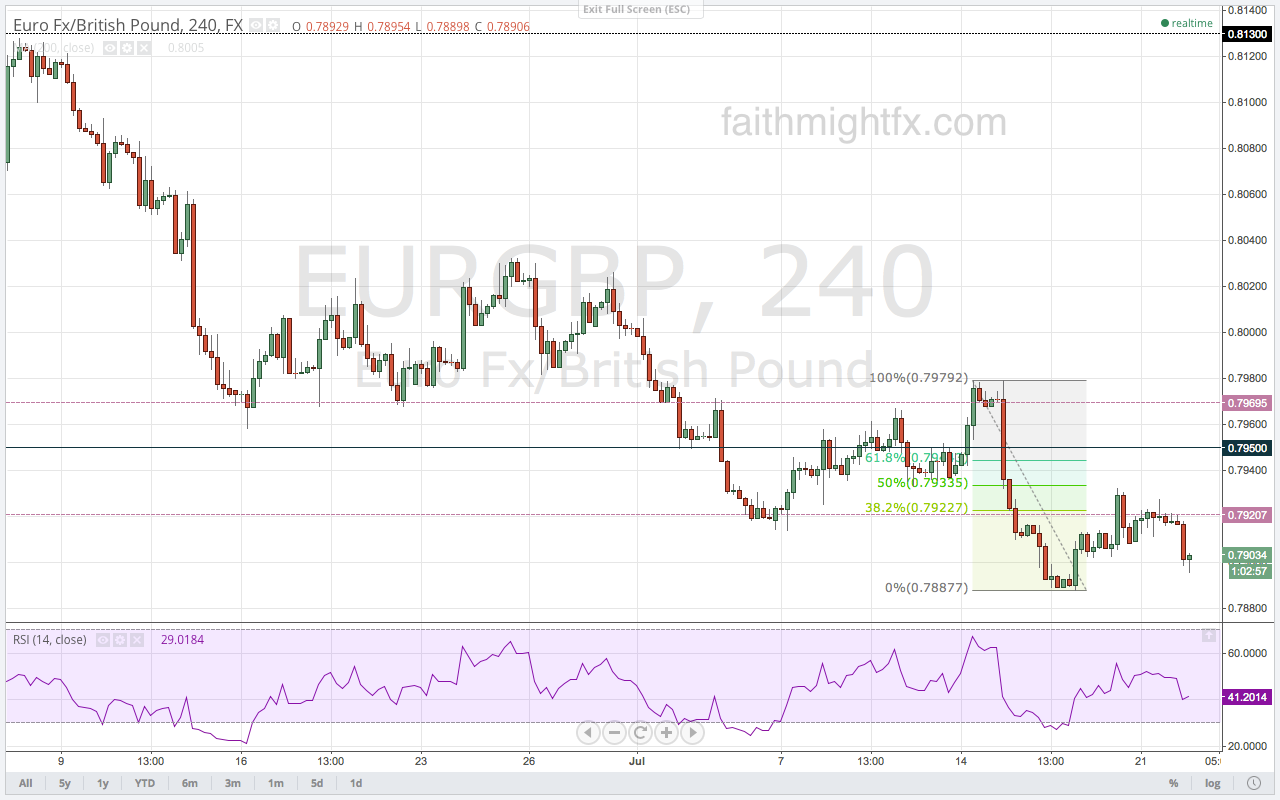
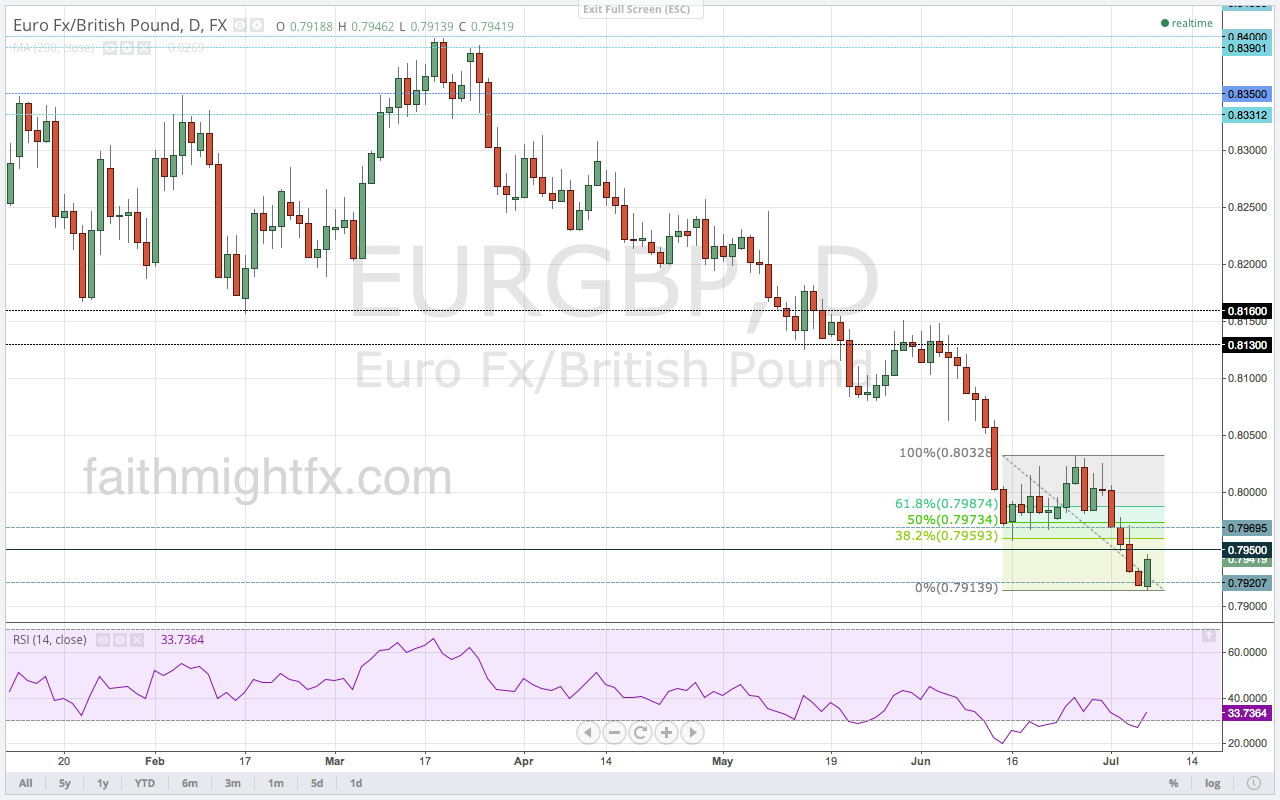
Do you see what I see? Despite Draghi’s best efforts, the $EURGBP continues to hold support. Remember the importance of 0.7920. This week, buyers have supported euro at this level. The first resistance is the neckline at 0.7982 but 0.8000 is decision-making time.
Now my question to my chartist friends, what is the target on a daily chart inverse head and shoulders?
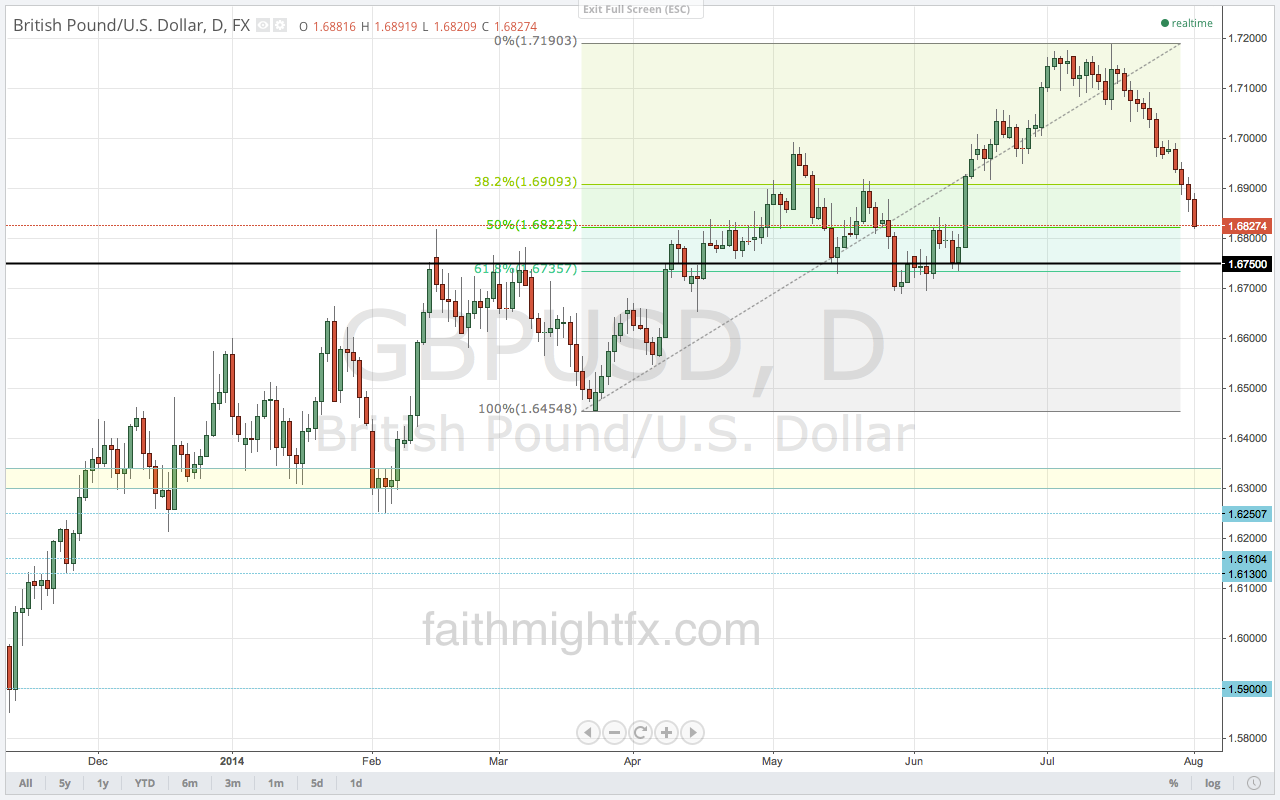
The GBP has experienced a selloff that I believe may be the beginning of a reversal. Data misses at a time when the market has gotten used to better-than-expected data is probably the biggest reason for a reversal to take hold. You can look at the market’s reaction to good news the past 2 days versus yesterday’s manufacturing miss in the chart below. The Bank of England’s hold on monetary policy today was expected to be a non-event. They delivered. Consequently, they have given markets an excuse to sell pounds short term. Traders are already looking ahead to the August Inflation Report that Mark Carney will deliver next week. If BoE telegraphs concern for a weaker economy going forward, we could see sterling really start to give back the gains of the past year.
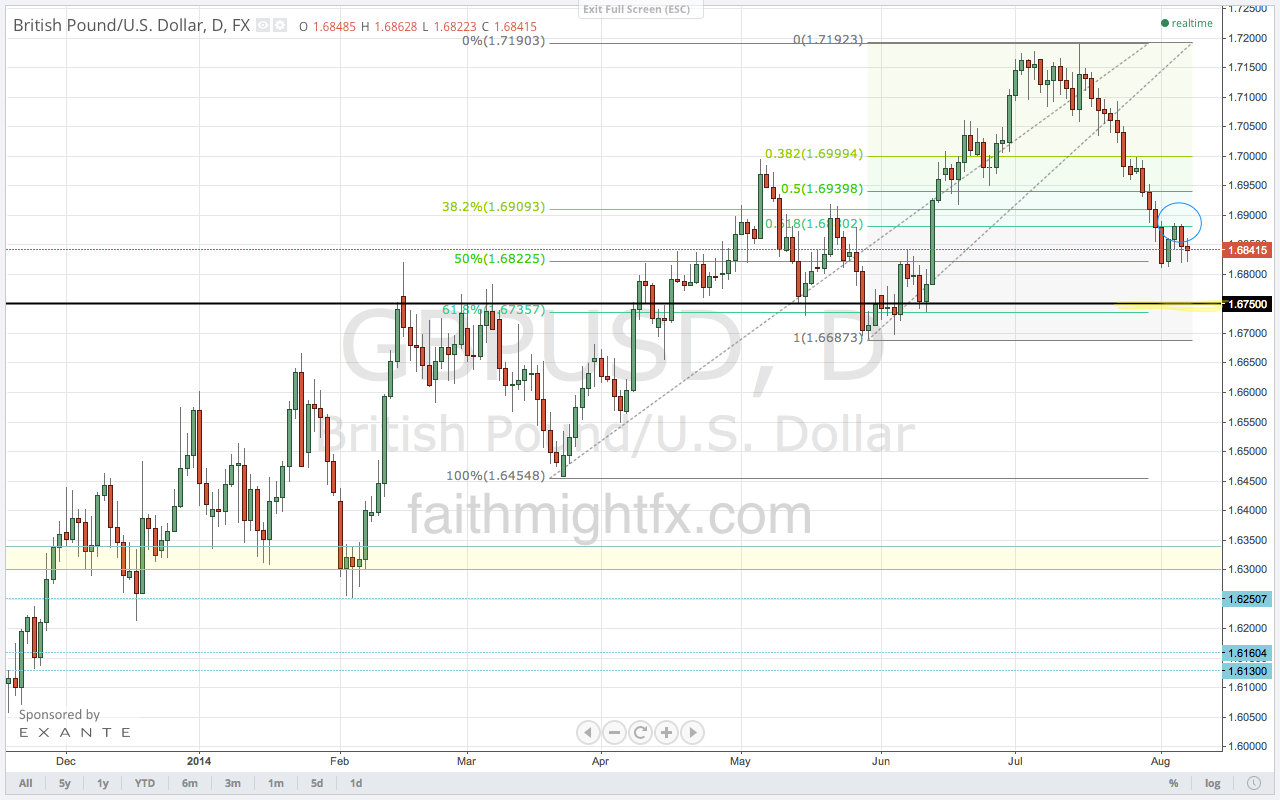
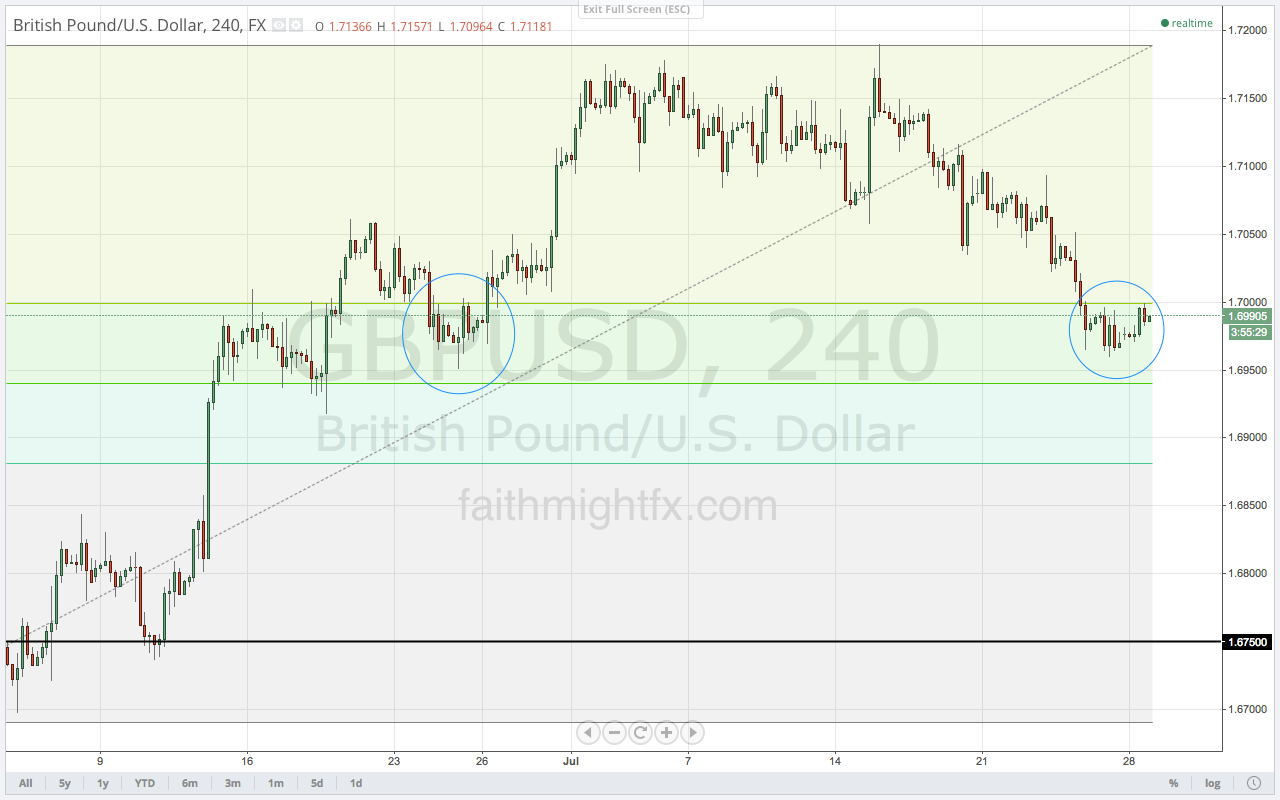
Even with $GBPUSD now trading well below 1.7000, I came into the week skeptical of this reversal. So I’ve been watching this week. Not much tweeting. Much more watching. What has developed is $GBPUSD having a hard time getting above 1.6880. This difficulty has given more evidence to the huge support level this level really was. It wasn’t just a 61.8% Fibonacci level. It is a level where supply meets demand. It is a level where buyers and sellers alike must make a decision. It looks like sellers are now in control with the break last week and the hold this week of 1.6880. And those capital flows are moving throughout the market as we see selloffs in the $GBPNZD, $GBPCAD and $GBPJPY. I expect bounces to be met by offers at 1.6880 and, on a break higher, at the more obvious 1.7000 psychological level.
Back on with Benzinga, I mentioned mental stops quite a bit in my segment. But mental stops are a topic that deserves a little more explanation than I gave on the show. We all know what stop orders are. If you don’t then stop reading now and read this. We call them hard stops. I’ve always used them in my trading. Always. Then some years ago, Raghee Horner said something about stops that really resonated with me.
“If your stops are not set, your broker will never know about them.”
While that statement did resonate with me, I didn’t really understand why she said it until recently. I believe the reason now is high frequency trading (HFT). Undoubtedly, there is HFT in the forex markets now too. If the broker-dealers can see your orders, you better believe the algos, black boxes, dark pools and other sinister machines see them too. Sound trading plans, which dutifully included hard stops, have been chopped to death in these markets. And I’m not the only one who thinks so. Pro veteran trader Peter Brandt wrote about this some years ago and the change he made to mental stops in order to remain competitive. However, despite these pros’ thoughts, I still used hard stops in my trading. Using bracket orders (limit orders in which both or either the stop loss and target limit are set too), stops were placed as soon as I entered a position and adjusted to break even once the trade was in the money.
No matter the basis, use stops in your trading
This sounds like a sound and prudent strategy. However, it was not yielding the results that they once were. So, very recently, I made the move to mental stops as well. It wasn’t until the Benziga show appearance that I reflected on how this trading strategy is working for me and what it might mean for newer traders.
Using mental stops mandates a disciplined approach in your trading. That is why novice traders cannot use them. As a novice, one is training to be disciplined in developing a trading plan and system. Once that hurdle is crossed, the newbie is then training to properly execute that plan and manage the emotions and ego that comes with trading in the markets. The practice of determining risk and sticking to exits is learned very practically using stop and limit orders.
Until your trading psychology is tight, I do not think you can successfully employ mental stops. Again, if you are a novice trader or a trader struggling with your mental capital, use the hard stops. Using mental stops does not mean we are no longer using stops in our trading. On the contrary. If you use a mental stop, you already know the level at which your trading plan is wrong. It’s just not being telegraphed to the market. Rather, we want the market to move as it should without the temptation to run orders that the HFT ilk is fond of doing. Mark the stop loss level on your charts and develop a rule for when you will manually come out of the trade. Will you get out on a break of the level? On the close? After a couple hours? A couple days? You will need to make that determination way before you think about using a mental stop in your trade. Mental stops can only be utilized within a well-defined trading plan. Fail to plan and you ultimately have plans to blow up your account. Be smart.
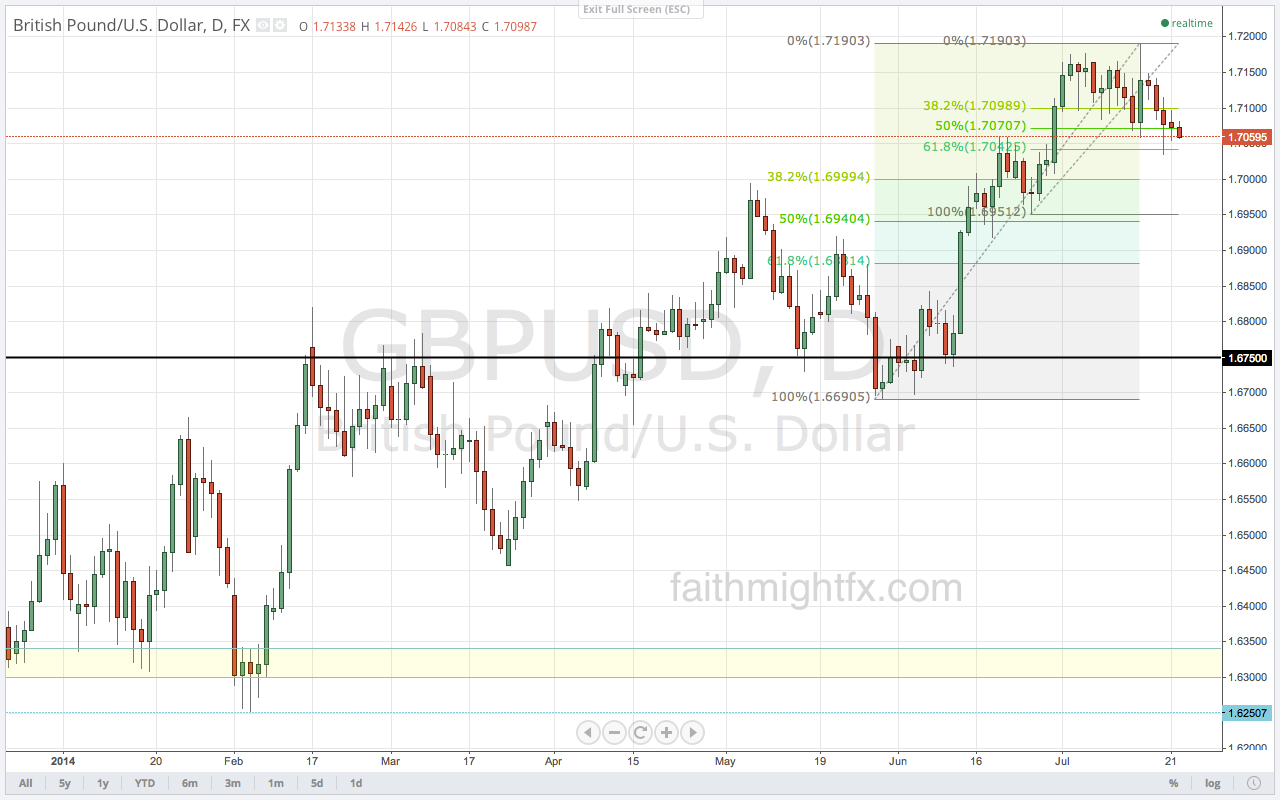
Headed into the non-farm payrolls, $GBPUSD has put in a significant correction back to 1.6822. Huge level. Not only is the 50% Fibonacci retracement level, it is also a former resistance level now serving as support.
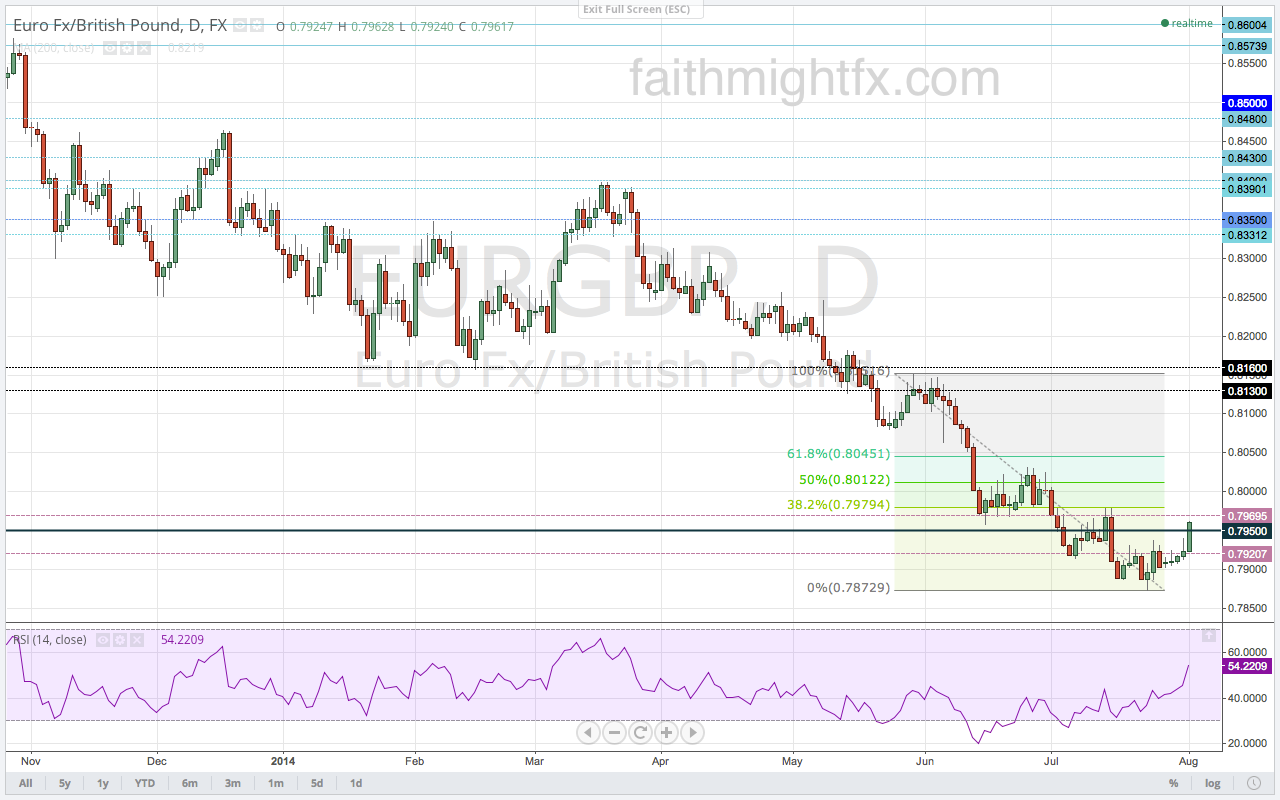
While the $EURGBP is staging a corrective bounce, it is still contained by its former zone of support now acting as resistance.
The market’s reaction to the NFP may determine a new direction in sterling. Keep an eye on both pairs into this morning’s news release. Trade what you see.
The $GBPUSD finally returned to 1.7000 and closed last week below the big psychological level. Many would find this a bearish signal. And I don’t blame them. Many a trader know the rules of support and resistance. So it is not surprising to find that as the new trading week opens today that we find price meeting offers lined up at the 1.7000 big fig. And that would certainly seem like another bearish signal: price finding resistance at the former support level.
The problem with these technical signals is that the fundamental picture remains pretty much the same. Despite the neutral tone and backpedaling from the Bank of England, sterling fundamentals are still strong enough. Yes, the market is reacting to a less-hawkish-than-preceived Carney. But as long as the economic data remains robust, traders will bet on the fact that Carney & Company will have to respond with some type of monetary tightening sooner rather than later. When that realization hits the market, the bulls will step back in.
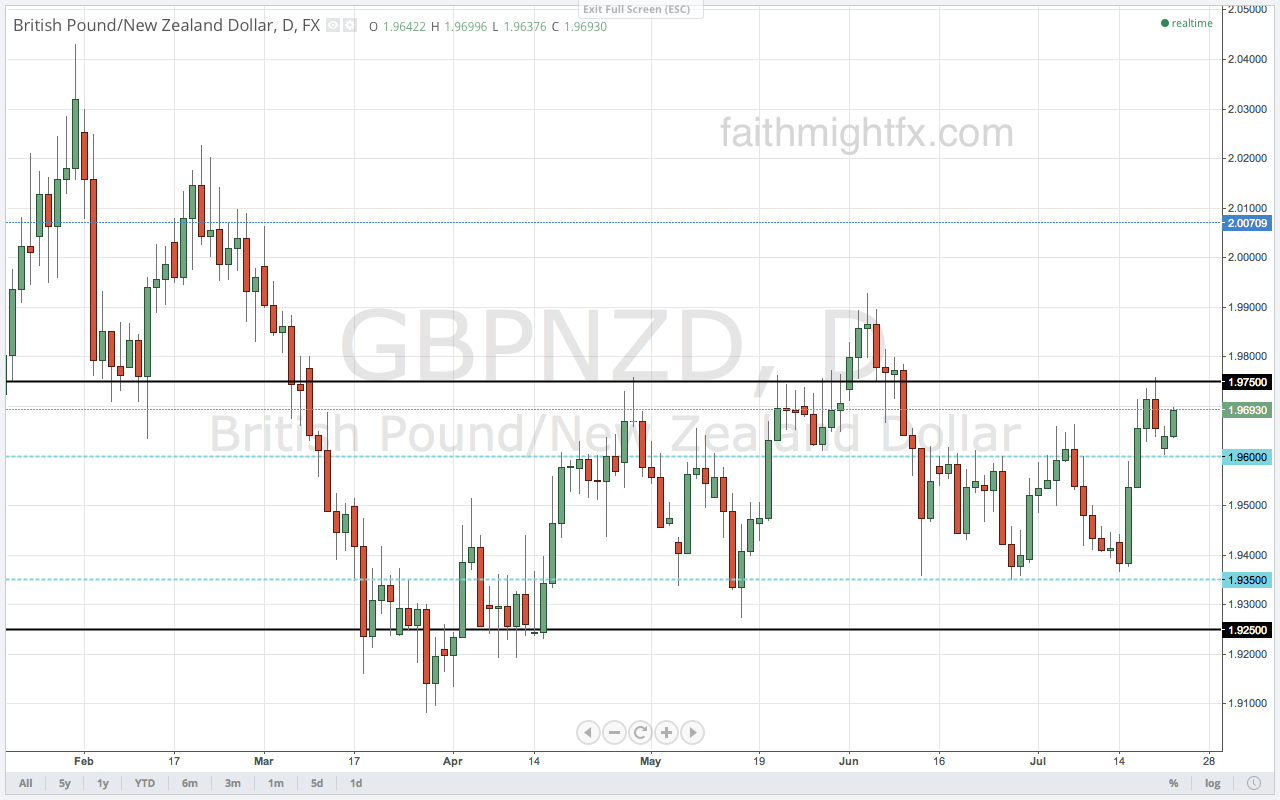
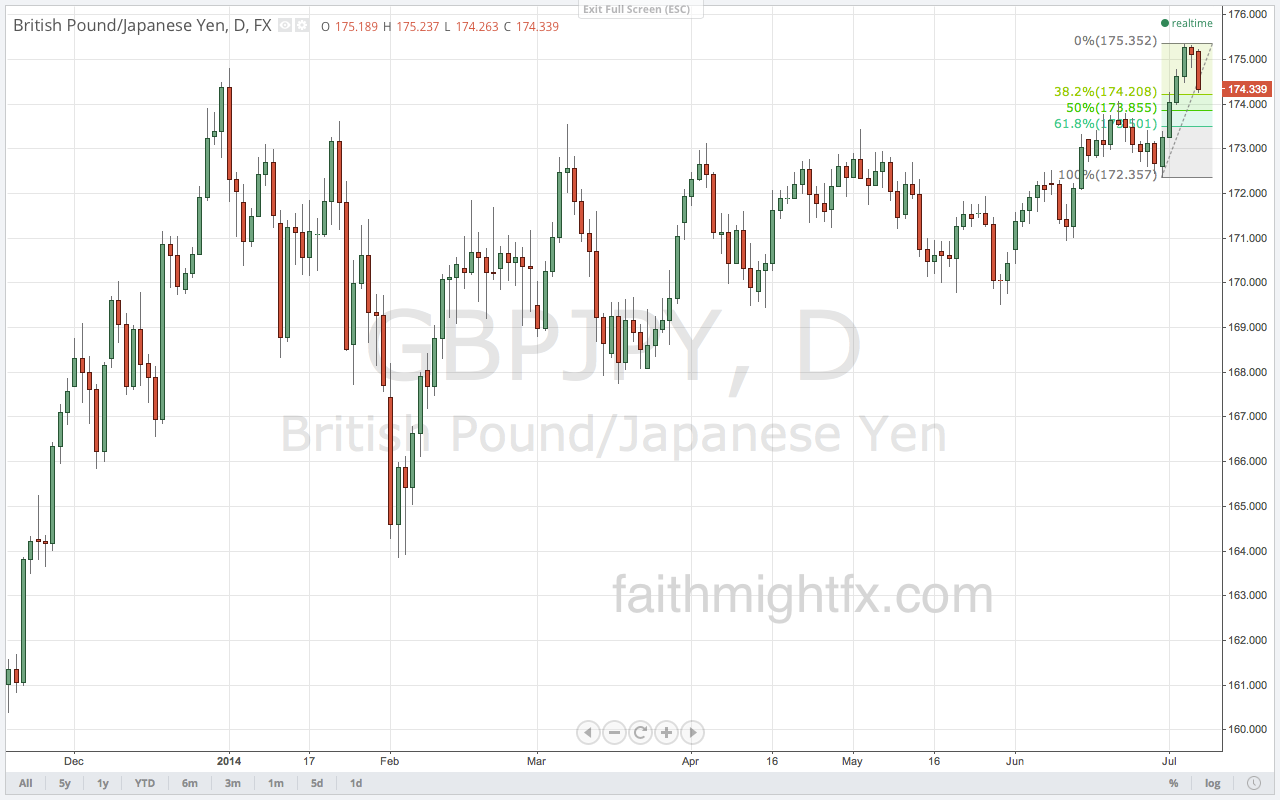
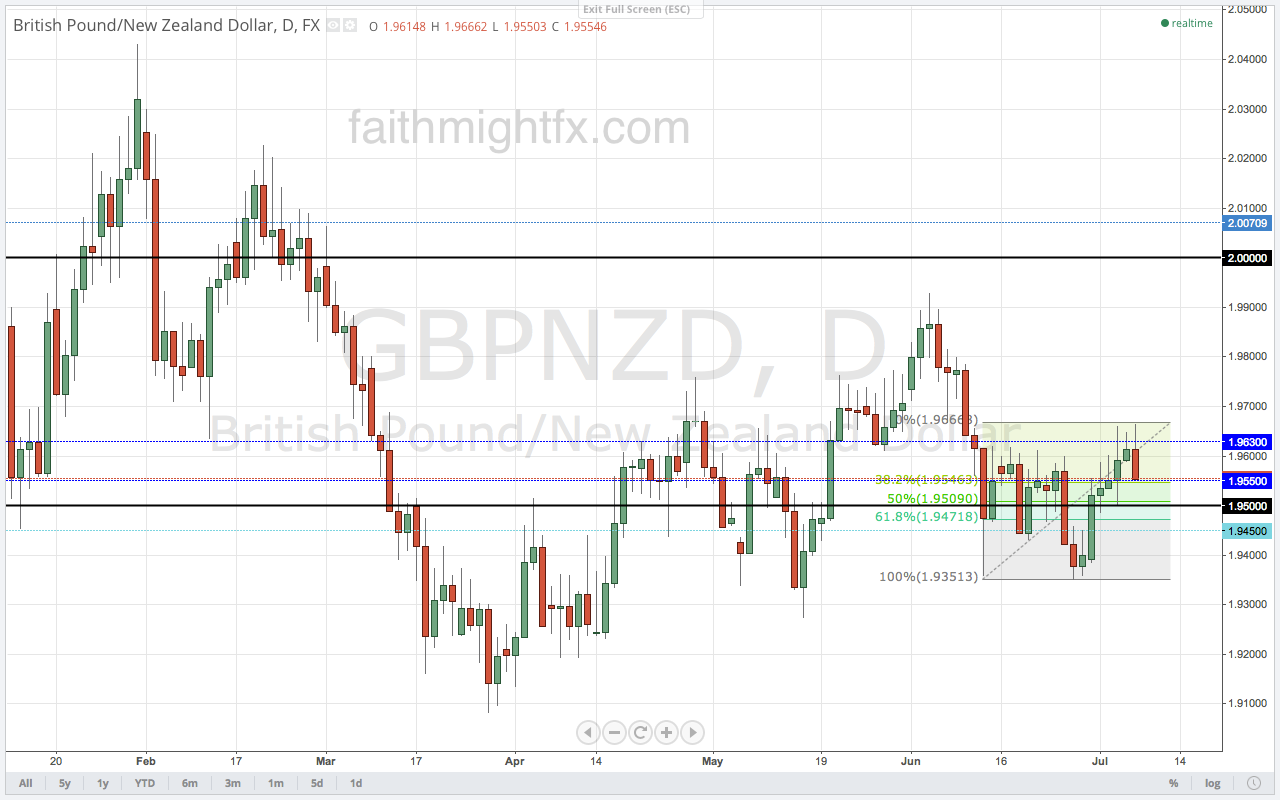
Last week was a seemingly anti-climatic week. The $GBPUSD had wild swings in both directions only to really have gone nowhere. It ended the week slightly lower. The $EURGBP has broken lower but no follow through yet. $GBPJPY is also lower after it failed to make a new high after its correction but no new lows. The $GBPNZD broke its range to the upside only to be capped by the larger 1.9750 resistance level.
As the new trading week opens, sterling is on the back foot. Last week’s lackluster was indecision and the market can only remain “stuck” for so long. Something has to give and something always does. But GBP is a mixed bag. While the rally in the $GBPUSD has given way to risk for a bigger sell-off, the $GBPNZD looks poised to move higher.
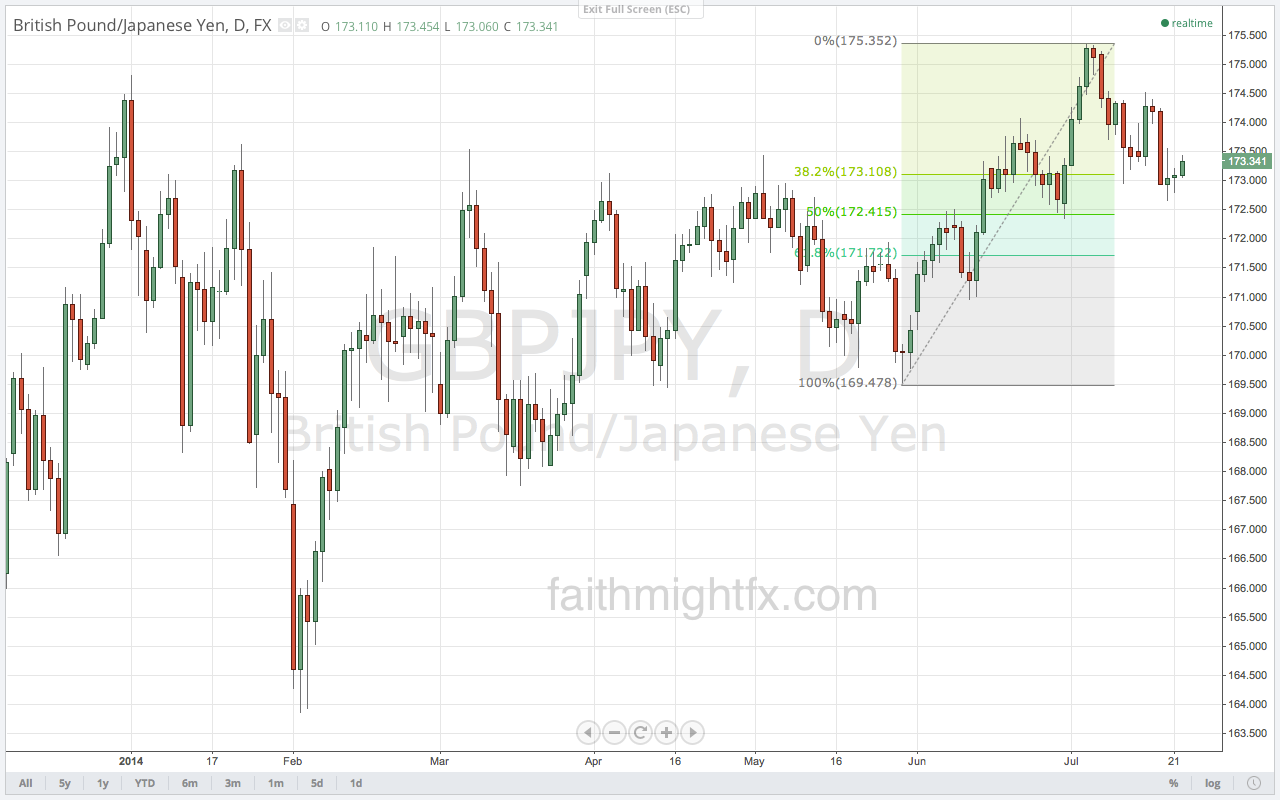
The $GBPJPY has also bounced nicely off the lows.
And the $EURGBP has become a battleground between $EURUSD weakness and $GBPUSD weakness.
The release of the Bank of England minutes, retail sales and Q2 GDP this week will either sink or boost sterling. If the minutes reveal any hawkish hints, particularly any votes for a rate hike, any chance for a correction are over. However, if the minutes turn out to be another non-event, retail sales and GDP become much more important. I think it would take a miss in both those releases to turn the tide on sterling. Watch the charts. Mind the calendar. Trade what you see.
It’s nice when a trading session goes according to plan. Retracement levels were tested yesterday as sterling consolidates recent gains ahead of Thursday’s Bank of England announcement. We started the week with these charts. We staked out our levels. But it is not enough to make a plan. You have to have some conviction to put your orders on too. It doesn’t pay, if you don’t play. Position-sizing is a very underappreciated skill. It takes more discipline than you would imagine to establish a position in the market with the correct size. Too big a position and the risk may take you out before you can earn the reward. Too small a position and the reward just isn’t as satisfying for your account balance. I find that by scaling into a position, you can spread the market risk across multiple, smaller trades maximizing the best price the market is giving. Once we determine our position, the hardest part of executing any plan is the action of inaction – we wait.
We didn’t have to wait long. Thanks in part to lower-than-expected manufacturing and industrial production releases, GBP fell across the board yesterday. Days like yesterday, you don’t have to do anything. Just watch price. In fact, if you are planning each trade and trading each plan, you should experience more days where you are simply watching price move at the market’s will. When it’s too tempting to watch price action, leave the screens or risk trading carelessly.
After yesterday, we are headed into FOMC with all the charts still in play. $GBPNZD breached its Fibonacci levels so only support at 1.9350 matters to the downside on more consolidation. All other charts ($GBPUSD, $EURGBP, $GBPJPY) stand. Markets will be light and choppy waiting for the 2pm EST release time. Be aware that some market participants will take advantage of lighter flows and size up their positions. When central banks come to the stage, it is the larger timeframes that really keep you focused on true supply and demand in the market.
don’t get chopped up in low liquidity wheeling and dealing … focus on the bigger picture
Our first full week of the new quarter and we are greeted to a correction in GBP across the board. With the Bank of England rate decision this Thursday, price action today indicates tons of positioning as market participants take profits and set orders ahead of the announcement.